
Styles
70s Interior Design: Warm Colour, Curves and Texture
August 1, 2026 · 8 min read
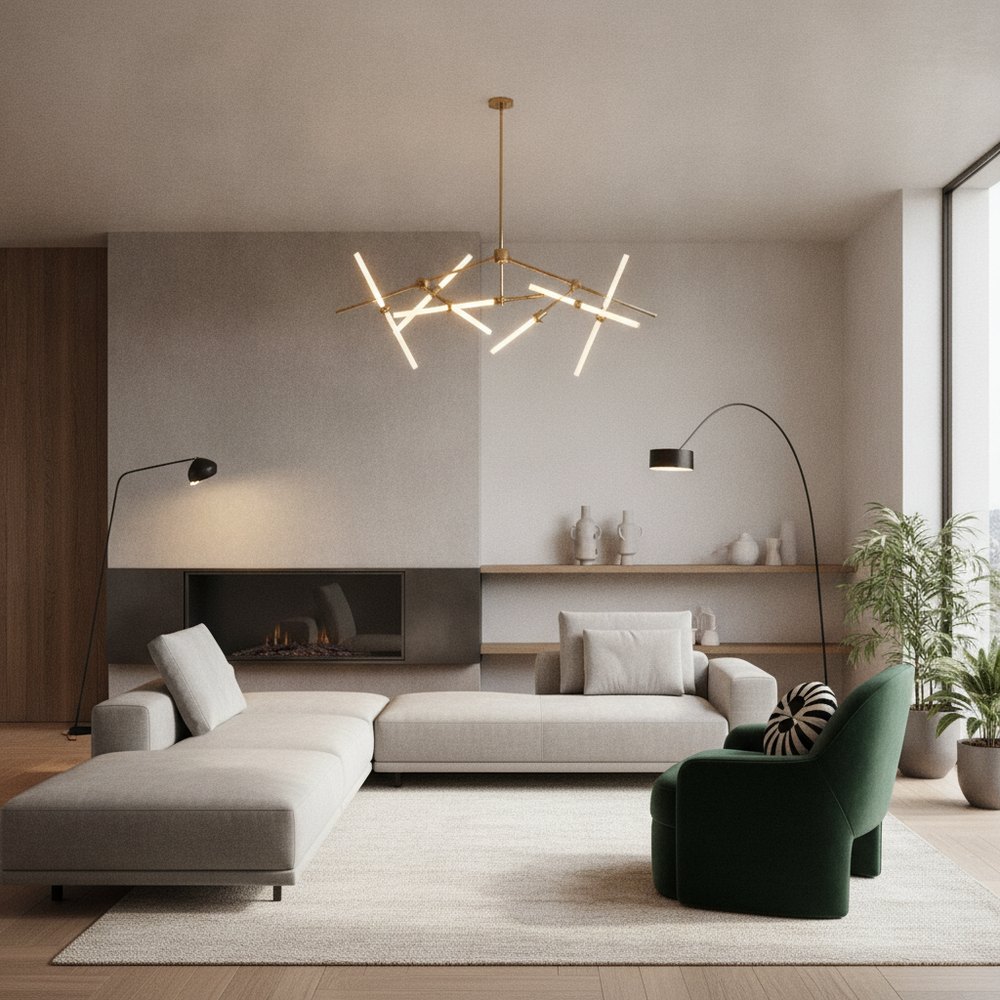
The current seventies revival takes four things from the decade: warm earth tones, rust, ochre, avocado, brown, curved and low-slung furniture, tactile materials such as bouclé, cord and burl wood, and chrome or smoked glass. It leaves behind the wall-to-wall shag carpet, the dark panelling and the overwhelming pattern.
Why the seventies came back
Every revival is a reaction, and this one is a reaction to a decade of pale grey minimalism with hard edges.
The seventies offered exactly what that was missing: warmth, colour, curves, and materials you want to touch. After years of white walls, chrome legs and rectilinear furniture, a rust-coloured curved sofa in a nubbly fabric reads as a relief rather than a period reference.
The revival is also selective in a way that is worth noticing. It has taken the furniture forms and the palette and largely ignored the wallpaper, the carpet and the panelling, which is why current seventies-influenced rooms look considerably calmer than actual seventies rooms did.
The palette
Warm, earthy and saturated, which is the biggest single departure from the previous decade.
The core colours are rust and terracotta, ochre and mustard, avocado and olive, chocolate brown, and cream. Against them sit chrome, smoked glass and burl or teak timber.
The way to use them now is as one or two strong colours against a warm neutral base, rather than the wall-to-wall approach of the original. A cream or clay room with a rust sofa and ochre cushions reads as current. The same colours on the walls, the carpet and the curtains simultaneously reads as a period reconstruction.
Avoid the very specific harvest gold and burnt orange combination in high volume, which is the fastest route to pastiche.
Furniture: curves and low profiles
The forms are the most useful thing the decade offers and they translate directly.
- Curved and modular seating. Rounded arms, low backs, sectional pieces that can be reconfigured. The defining seventies form and the one currently everywhere.
- Low profiles. Sofas and chairs closer to the floor, which makes ceilings read as higher and rooms feel more relaxed.
- Burl wood and teak. Highly figured timber on a sideboard or cabinet, which is the single most seventies material available.
- Chrome and smoked glass. A chrome floor lamp or a smoked glass table adds the era's sharper edge against all the softness.
- Modular shelving. Wall-mounted systems in timber or metal, which are practical and period-correct.
Texture is the point
If the sixties were about form and the eighties about gloss, the seventies were about texture, and this is what makes the revival feel good rather than just look interesting.
The materials to use: bouclé, corduroy and cord upholstery, chenille, wool in deep pile, cork, rattan and cane, and rough plaster. All of them are matt and tactile and they absorb light rather than reflecting it.
The reason this matters is that a room in warm earth tones with only smooth surfaces looks flat and slightly synthetic. The same palette in tactile materials looks rich. Our texture and layering guide covers how to build this up.
What to leave in the seventies
Several elements are period-accurate and best avoided.
Wall-to-wall shag carpet, which is a cleaning problem and reads as a costume. Dark timber wall panelling across a whole room, which makes modern rooms with lower ceilings oppressive. Large-scale swirling wallpaper on all four walls. Popcorn ceilings. Avocado bathroom suites, which have not become good again despite several attempts.
The general rule: take the furniture, the palette and the materials, and leave the wall and floor treatments. Modern rooms are smaller and lower than seventies rooms, and the surface treatments that worked then close a modern room down.
One conversation pit note
The sunken seating area is the decade's most photographed feature and it is worth a realistic word.
A true conversation pit requires a floor level change, which in most homes means either a suspended floor with room beneath or a raised platform around it, and that costs a lot of ceiling height. It is a genuine architectural intervention rather than a decorating decision.
The achievable version is a low modular seating arrangement in a defined area, ideally on a large rug with the seating facing inwards rather than at a television. That gets most of the social effect, which is what the pit was actually for, without the building work.
How much is enough
The revival works best at partial strength, which is true of most period references.
In practice, one or two strong seventies pieces in an otherwise contemporary room is the sweet spot: a curved sofa, or a burl wood sideboard, or a chrome arc lamp, against plain warm walls and a plain floor. The piece reads as deliberate and slightly witty.
Push to five or six period pieces and the room stops referencing the decade and starts reconstructing it, at which point it needs to be very well done to avoid looking like a set. For a related but more restrained era, see mid-century modern design.
Test the palette
Warm saturated colours are exactly the ones that behave differently in different light, and rust in particular can go either rich or muddy.
With Decorly you can photograph your room and test a seventies palette and a curved low seating arrangement at your real proportions before committing to a large sofa. For related styles, see mid-century modern design and maximalist interior design.
Frequently asked questions
What colours define 70s interior design?
Rust and terracotta, ochre and mustard, avocado and olive, chocolate brown and cream, set against chrome, smoked glass and figured timber. The current way to use them is one or two strong colours against a warm neutral base, rather than covering every surface as the original did.
What furniture says 70s?
Curved and modular low-slung seating, burl wood and teak sideboards, chrome and smoked glass lighting and tables, and wall-mounted modular shelving. The curved sectional sofa is the single most defining form and translates directly into modern rooms.
What should you avoid from 70s design?
Wall-to-wall shag carpet, dark timber panelling across a whole room, large-scale swirling wallpaper on all four walls, popcorn ceilings and avocado bathroom suites. Take the furniture, palette and materials; leave the wall and floor treatments, which close modern rooms down.
Can you build a conversation pit at home?
Rarely, since a true sunken seating area needs a floor level change and costs significant ceiling height. The achievable version is a low modular seating arrangement on a large rug with the seats facing inwards rather than at a television, which gives most of the social effect.