
Styles
Eclectic Interior Design: Mixing Styles That Actually Work Together
August 5, 2026 · 9 min read
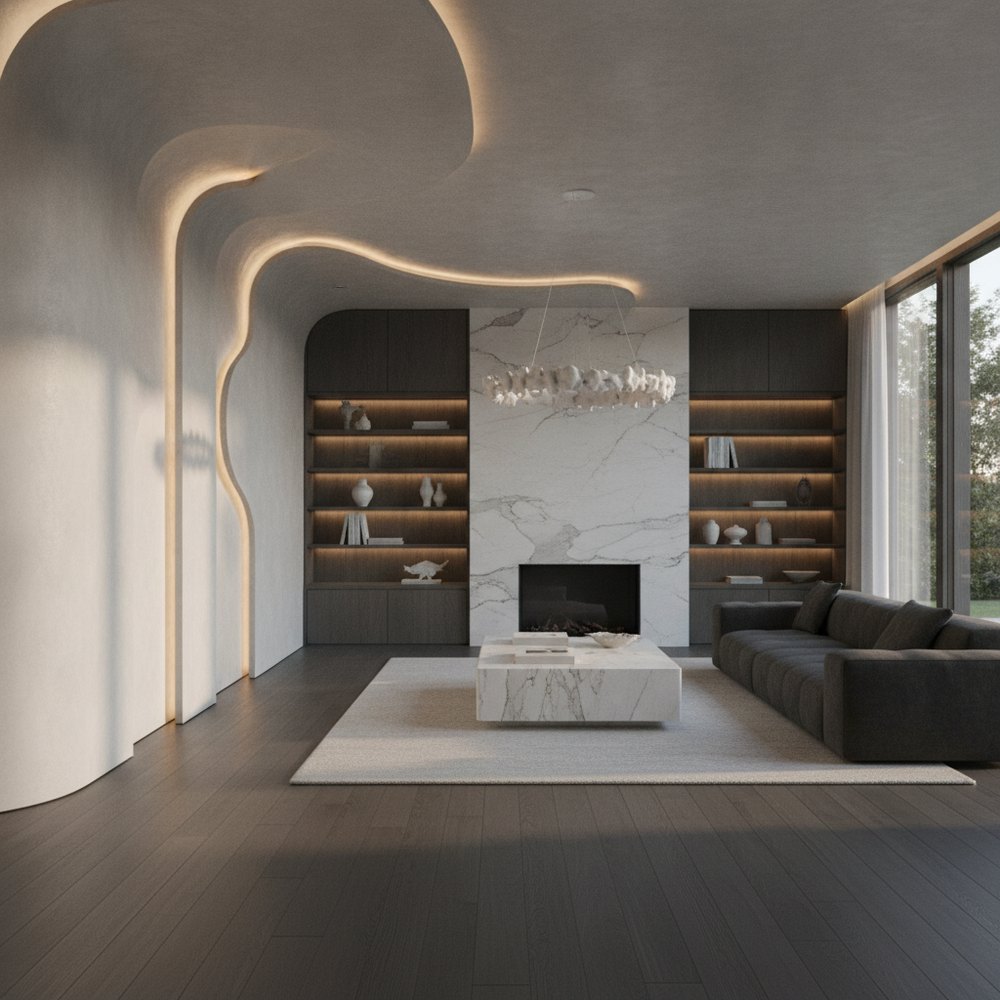
Eclectic rooms work when one element is held constant across everything else. Usually that is a tight colour palette, but it can also be a repeated material, a consistent scale, or a single dominant piece everything else defers to. Without one of those four anchors, a mixed room reads as unresolved rather than collected.
Eclectic is a discipline, not a licence
The common misunderstanding is that eclectic means anything goes, which produces rooms full of things that individually are nice and collectively are exhausting.
What is actually happening in a successful eclectic room is that the designer has removed one constraint, period or style consistency, and compensated by tightening several others. The palette is narrower than usual. The scale relationships are more carefully judged. The arrangement is more deliberate.
This is why eclectic is genuinely harder than committing to a single style. A Scandinavian room has rules that do the work for you. An eclectic room has to earn its coherence.
The four anchors
Pick at least one, and if you are new to this, pick colour.
- 1A tight colour palette. Three or four colours running through every piece regardless of period. A Victorian chest, a mid-century chair and a modern lamp all in the same family read as a set.
- 2A repeated material. Brass in five places, or oak in five places, threads unrelated objects together.
- 3Consistent scale. Furniture at similar visual weight, or a clear hierarchy of one large piece and several small, rather than a jumble of mid-sized objects.
- 4One dominant piece. A large painting, a substantial sofa, an architectural fireplace, that everything else is arranged around and clearly subordinate to.
Mixing periods well
The pairings that consistently work follow a pattern: contrast in period, agreement in weight.
An ornate antique against a plain modern piece works, because the plain one gives the eye a rest. Two ornate pieces from different periods usually fight, because both are asking for attention with different vocabularies.
Practically: put modern upholstery with antique case furniture, or antique upholstery with modern lighting and art. Keep one category, the thing you sit on, the thing that stores, the thing that lights, consistently modern, and let another be old.
Contemporary art is the most reliable bridge of all. A modern painting above an 18th-century chest makes both look deliberate.
How much pattern can an eclectic room take?
More than a minimal room and less than people assume, and the governing factor is again the palette.
Multiple patterns coexist happily if they share colours and differ in scale. A large-scale floral, a medium stripe and a small geometric, all containing the same two or three colours, read as intentional layering. The same three patterns in unrelated colours read as noise.
Leave at least one large surface plain, usually the largest upholstered piece or the walls, so the eye has a resting place. And keep the floor either plain or the single most patterned element, never a middling pattern that competes with the textiles.
Arrangement matters more than acquisition
A collection of interesting things scattered around a room looks like storage. The same things grouped look curated, and the difference is entirely arrangement.
Group by threes and by height, so objects form triangular compositions rather than lines. Cluster small things together on a tray or a single surface rather than distributing them. Leave whole surfaces empty, since negative space is what makes the occupied surfaces read as considered.
On walls, a dense gallery arrangement holds mixed frames and periods far better than isolated pieces, because the grouping itself becomes the unifying element. Our gallery wall guide covers the layout.
Eclectic versus maximalist
The two get conflated and are genuinely different.
Maximalism is about abundance: more pattern, more colour, more objects, deliberately. An eclectic room can be quite sparse; what makes it eclectic is the mixture of origins, not the quantity.
You can have a minimal eclectic room, three pieces from three centuries in an empty white space, and a maximalist room that is entirely one style. If your instinct is towards abundance, our maximalist guide is the more relevant read.
The mistakes that make it look like a junk shop
A short list of the things that most often break a mixed room.
- No palette discipline. The most common failure by a distance. Interesting objects in twelve colours will never cohere.
- Everything mid-sized. Rooms need a hierarchy. Six medium objects with no large one and no small ones read as clutter.
- Nothing plain. If every surface has pattern, texture or ornament, the room has no rest.
- Buying to fill. Eclectic rooms are built over time; filling one in a weekend produces a themed room, not a collected one.
- Ignoring quality differences. One obviously cheap item among good ones is more noticeable in an eclectic room than in a matched one.
Test the mix before you commit
Eclectic is exactly the case where you cannot tell from a mood board, because the whole question is how specific objects relate in a specific room.
With Decorly you can photograph your room and test different combinations, a tighter palette against a looser one, one dominant piece against several equal ones, before buying anything else. For related reading, see maximalist interior design and how to mix colours.
Frequently asked questions
What is eclectic interior design?
A style that deliberately mixes periods, origins and design languages in one room. It is not the absence of rules: successful eclectic rooms remove period consistency and compensate by tightening the palette, the scale relationships and the arrangement.
How do you mix design styles without it looking messy?
Hold one element constant. Usually a tight three or four colour palette running through every piece, but a repeated material such as brass or oak, a consistent scale hierarchy, or one dominant piece everything defers to will all do the same job.
How do you mix antique and modern pieces?
Contrast the period, agree on the weight. An ornate antique beside a plain modern piece works because the plain one lets the eye rest; two ornate pieces from different periods usually fight. Contemporary art above an antique piece is the most reliable bridge of all.
What is the difference between eclectic and maximalist?
Maximalism is about abundance, more pattern, colour and objects. Eclectic is about mixed origins and can be quite sparse. A minimal eclectic room of three pieces from three centuries is possible, as is a maximalist room entirely in one style.