
Outdoor
AI Garden Design: See Your Garden Redesigned Before You Dig
September 3, 2026 · 8 min read
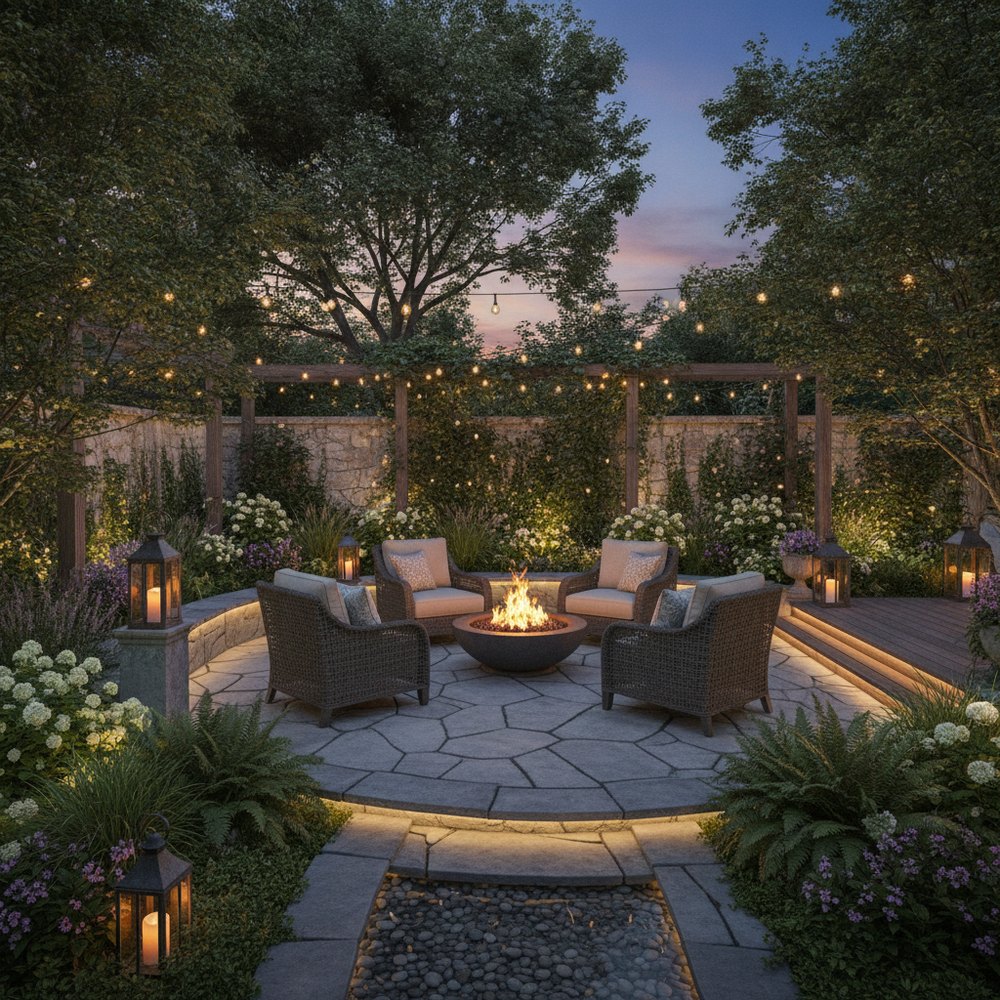
AI garden design lets you photograph your garden and see it redesigned with new paving, planting, levels, seating and lighting, while the boundaries, house wall and aspect stay exactly as they are. For a project measured in weeks of labour rather than an afternoon, testing the vision first is worth the ten minutes.
Why gardens are the hardest thing to imagine
People are reasonably good at picturing a room. Almost nobody is good at picturing a garden, and there is a specific reason for it.
A room is a bounded box with fixed proportions, and you can hold it in your head. A garden is an open space with an irregular shape, changing light, a boundary you did not choose, and a fourth dimension nobody mentions: it grows. The gap between a bare rectangle of lawn and the same space with structure, levels and mature planting is enormous, and standing in the bare version, that gap is essentially invisible.
That is why garden projects stall. Not because people cannot decide, but because they cannot see far enough ahead to commit.
What to test first in a garden redesign
Work from the permanent to the changeable, because that is the order the money goes out in.
- Hard landscaping shape. Where the paving stops and the planting starts. This single line determines whether the garden feels designed or just filled in.
- Levels. A single step or a raised bed changes a flat garden completely, and it is very hard to picture from ground level.
- Paving material. Porcelain, sandstone, gravel and timber decking behave differently in your light and against your house's brick.
- Planting density. Test sparse against generous. Almost every real garden is under-planted, and seeing the dense version is what convinces people.
- Lighting. The evening view is half the value of a garden and almost never planned for.
How do you design a small garden so it feels bigger?
Small gardens respond to the opposite of what people instinctively do, which is to push everything to the edges and leave a bare patch in the middle.
The moves that work are: break the sightline so you cannot see the whole garden at once, which makes it feel like there is more to discover; use diagonal or curved lines rather than rectangles parallel to the boundary; plant the boundaries heavily so the fence disappears; and take one corner and make it a destination with seating, so the garden has somewhere to go.
All four are visible in a render and almost invisible on paper. Compare your garden with a straight lawn-and-border layout against a diagonal layout with a hidden corner and the difference in perceived size is usually significant. Our small backyard ideas guide covers the planting side.
Testing paving against your actual house
Paving is the largest single-material decision in most gardens and the one most often chosen from a sample in a builders' merchant, under fluorescent light, against nothing.
The thing that matters is how it sits against your house. Grey porcelain against red brick can look sharp and deliberate or cold and municipal depending on the exact tones involved, and there is no way to know which without seeing them together. Buff sandstone against a rendered white house reads warm; the same sandstone against yellow London stock brick can read muddy.
Because AI keeps your house wall in frame, you are testing the actual relationship rather than the sample.
Planting: what AI is good and bad at
Be clear about the boundary here, because it is the one place garden AI can mislead.
It is excellent at showing you structure, density, height and the overall feel of a planting scheme, whether you want architectural and evergreen, loose and prairie-like, or tropical and glossy. That is genuinely useful, because those are the decisions that determine whether you like the garden.
It is not a plant list. It does not know your soil, your aspect, your rainfall or your hardiness zone, and it will happily render something that would die in your garden by February. Take the mood and structure from the render, then choose actual plants with a nursery or a planting guide for your conditions. Our garden landscaping ideas guide is a reasonable starting point.
The evening garden
Most gardens are designed for a July afternoon and used on an October evening, which is why so many of them are unusable for two thirds of the year.
Test the same garden with three lighting approaches: nothing, a single bright floodlight from the house, and low-level layered lighting, uplights into two trees, a couple of path lights, and something warm by the seating. The floodlit version looks like a car park. The layered version extends the season and the usable hours, and it is a far smaller job than most people assume, particularly if it goes in at the same time as the paving.
Turning a garden render into a plan
Gardens involve trades, so the render needs translating into things a landscaper can quote.
- Paved area in rough square metres and one named material.
- Any level change, described as a step, retaining wall or raised bed.
- Planting bed shape, which is the line you liked in the render.
- Structure, such as a pergola, screen, storage or seating that needs building.
- Lighting positions, marked before the paving goes down, because retrofitting cabling is miserable.
See your garden redesigned
Photograph from the back door on an overcast day, standing far enough back to include the house wall, the boundaries and the full depth.
With Decorly you can restyle your real garden in seconds, testing layouts, paving, planting density and lighting against your own boundaries and aspect. For more ideas, see garden landscaping ideas, patio design ideas and small backyard ideas.
Frequently asked questions
Can AI redesign my garden from a photo?
Yes. Upload a photo taken from the house showing the boundaries and full depth, and the tool regenerates paving, planting, levels, seating and lighting while keeping your fences, house wall and aspect fixed.
Will AI tell me which plants to buy?
No, and you should not treat it as a plant list. It shows structure, density and mood extremely well, but it does not know your soil, aspect or climate. Take the look from the render and choose actual species with a nursery or a planting guide for your conditions.
How do you make a small garden feel bigger?
Break the sightline so the whole garden is not visible at once, use diagonal or curved lines rather than rectangles parallel to the fence, plant the boundaries heavily so they recede, and give one corner a reason to walk to it. Together these do far more than any single trick.
Is it worth planning garden lighting before landscaping?
Very much so. Cabling laid before paving goes down is straightforward; retrofitting it afterwards means lifting slabs. Decide the lighting positions at the same time as the layout, even if you fit the lights later.